Class Dojo – Background
Class Dojo is a social networking platform has been specifically designed to enable teachers, students and parents to build a positive online learning community.
Class Dojo requires students, parents and teachers to have a login on the website and to subscribe to a school community online and to be assigned to a particular class.
This platform contains:
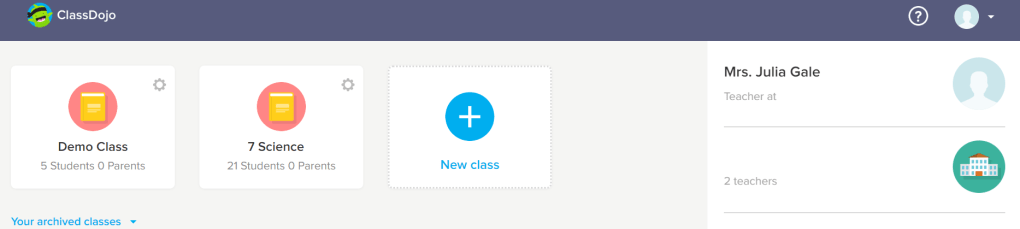
- Classes Dashboard (see Figure 1) – teachers can create classes which will be displayed on the dashboard which reflect their actual classes
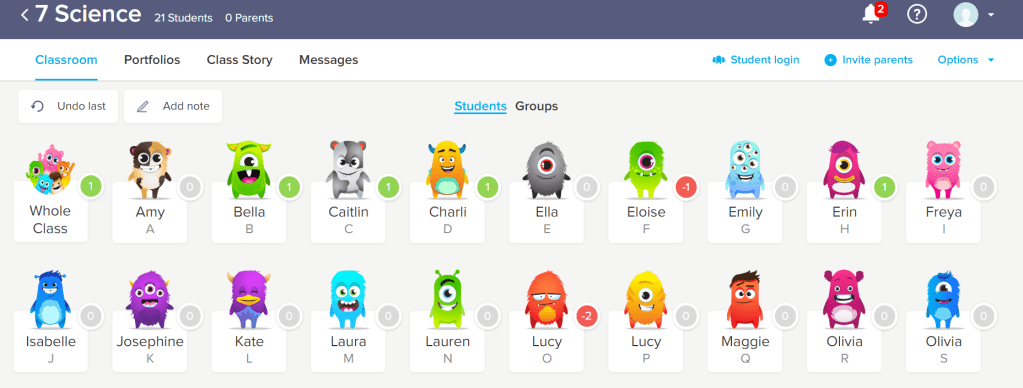
- Classroom (see Figure 2)- An overview of each student with a number which indicates whether the students have been assigned positive or negative feedback (as indicated by the red or green number)
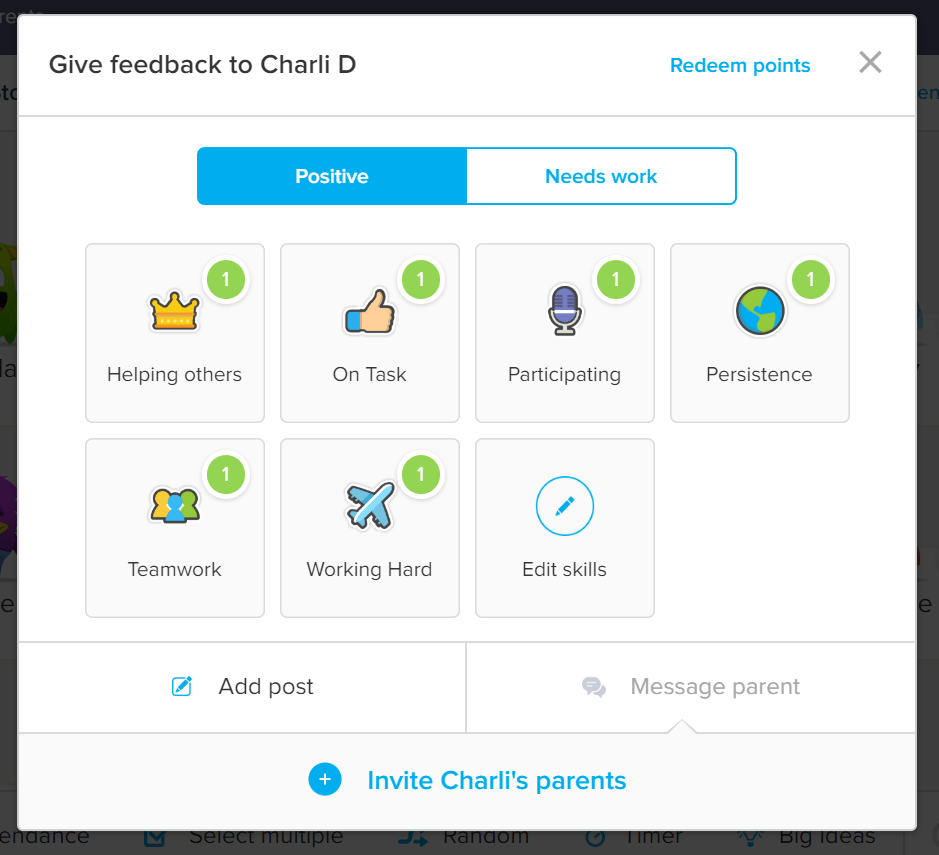
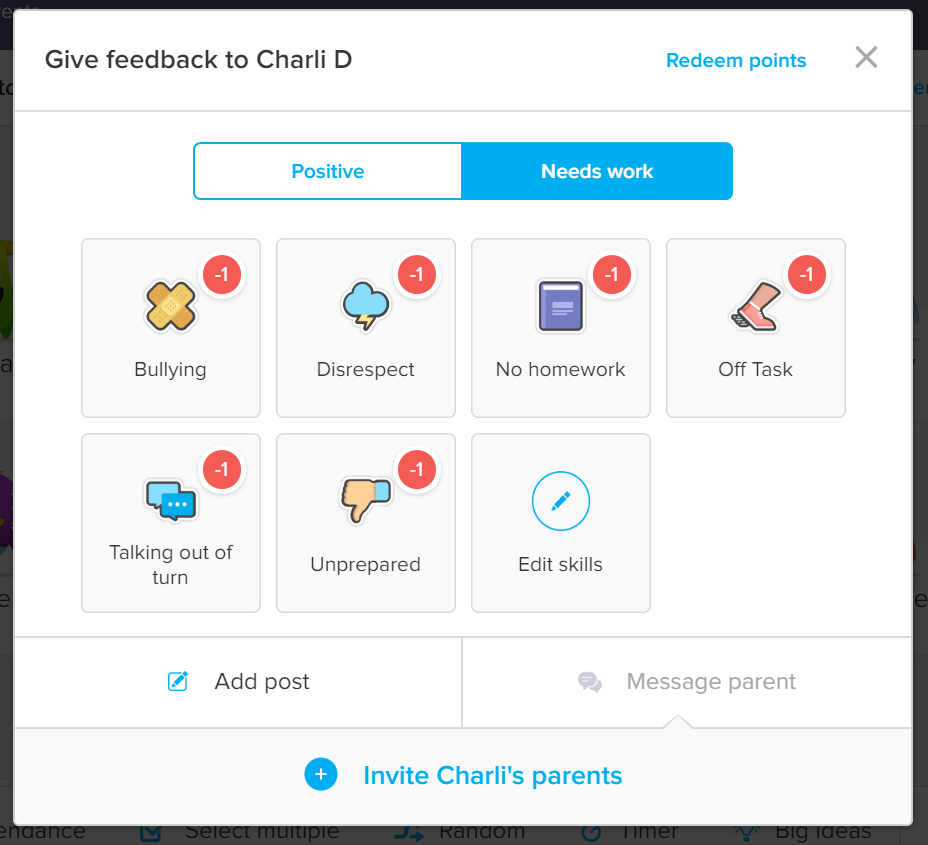
- Feedback (See Figure 3 and 4) – Positive and negative feedback which can be assigned to students to give them an overall score (the outcome of the positive and negative number added)
- Porfolios (See Figure 4) – where students can be assigned work for teacher feedback and for student collaboration.
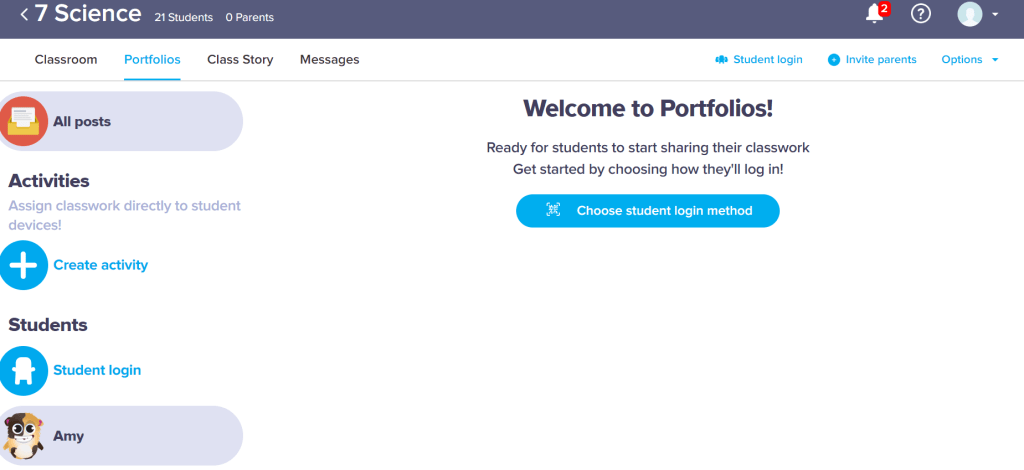
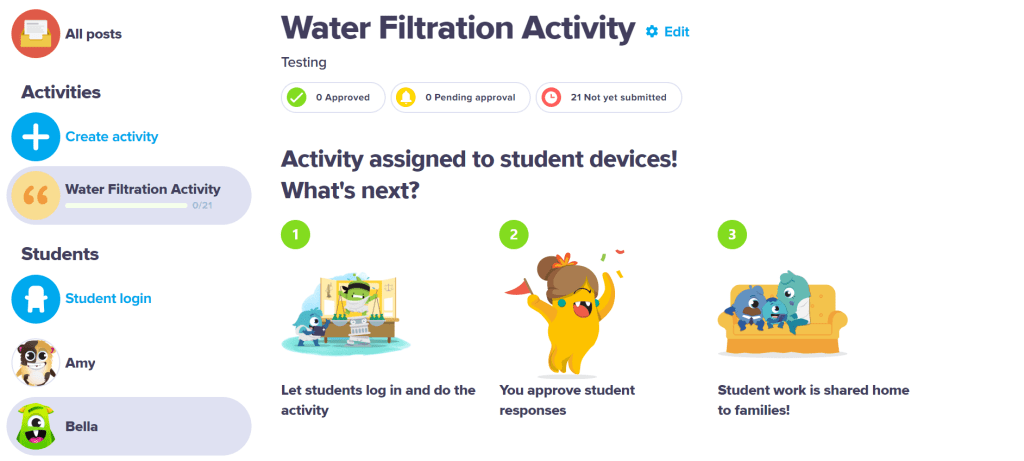
- Activities (See Figure 6) – students can be assigned work and teachers can see at a glance who has completed what activities and what feedback is needed.
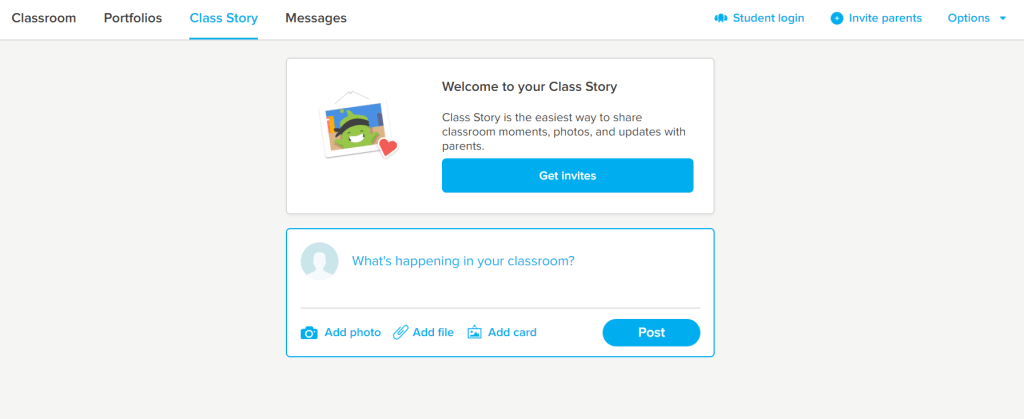
- Class story (See Figure 7) – which allows the teacher to post updates (text, photos, files or story cards) so that parents can see what their children have been doing in class.
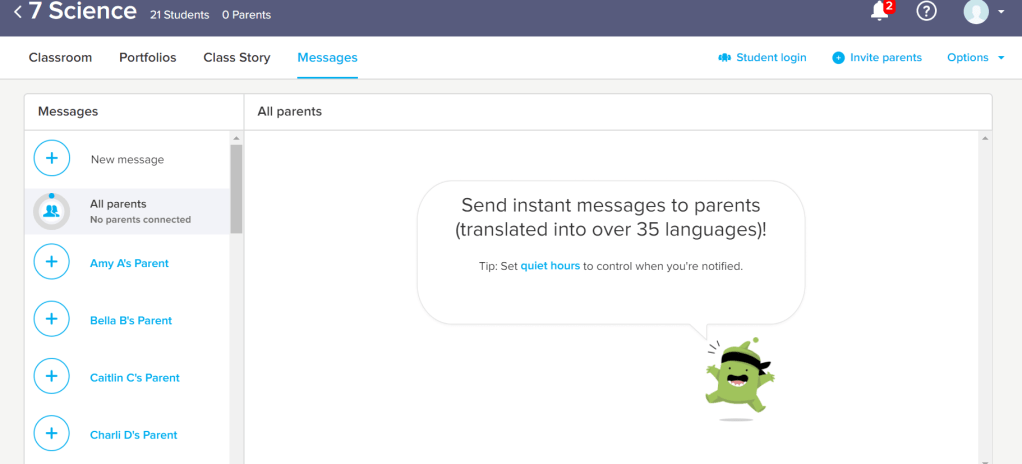
- Messages (See Figure 8) – these are to be used for communication between the teacher and the parents in replacement of emails. Messages can be translated into 35 different languages to facilitate clear communication between the two parties.
- Resources – outside of the dashboard teachers have access to a variety of premade resources which can be sent to both students and parents to assist students in using Class Dojo.
Class Dojo – Secondary School Science Classroom Advantages
While Class Dojo does offer most of what my classes would have access through on our learning platform (Canvas), one major advantages is the formalisation of behaviour management and increasing the transparancy of what is occuring in the classroom through the Class Story. Through providing postive and negative feedback students are given a visualisation of their interactions in class and are therefore made aware of their behaviour. Often teachers focus on negative behaviours that need to be address that positive behaviours can be overlooked. This platform provides an intentional record of positive engagement in learning that can then be recognised and rewarded.(Cetin & Cetin, 2018, p. 90) The point system will, in part, motivate students to strive to better engaged in class. However, one might argue that well designed and interesting learning activities might negate negative behaviour without the need for a point system. What is additionally positive is that research conducted by Cetin & Cetin, 2018, found that overall students in Grades 5 – 8 feel positive about the use Class Dojo and gender did not make a difference to their perspective on this platform (p. 95). A platform like Class Dojo’s main strength in being able to develop positive rapport with students through encouragement and including parents in the learning of the class which fosters communication and belonging. (Bower, M., 2017, p. 233)
Class Dojo – Secondary School Science Classroom Limitations
The major drawback of a platform like Class Dojo in the secondary context is that once students go beyond Stage 4, it no longer feels age appropriate. This is reflected a study by Cetin & Cetin, 2018, which showed a drop in positive interest in the program in the older grades (p. 94). In the later part of secondary school students may start to feel like this platform is too ”young” and this means that there may be little interest to engage with this platform to track positive and negative feedback from their teacher therefore rending the use Class Dojo ineffective for behaviour management. Furthermore, the class story aspect of the platform encourages parents to see what students are completing in class, however it is well known that students of the Stage 5 and 6 age are craving independence and privacy from their parents and thus students might find a platform like this unsuitable to their social and developmental needs.
References:
Bower, M. (2017). Design of technology-enhanced learning – Integrating research and practice. Bingley, UK: Emerald Publishing Group
Cetin, H., & Cetin, I. (2018). Views of Middle School Students about Class Dojo Education Technology. Acta Didactica Napocensia, 11(3-4), 89-96. doi: 10.24193/adn.11.3-4.7
Learn all about ClassDojo ♥. (2019). Retrieved 10 October 2019, from https://www.classdojo.com/

 EDCN865 e-Porfolio - Julia Gale
Hi Julia,
Thank you for sharing your thoughts on Class Dojo. I have only used it in the past for positive behaviour reinforcement as part of a whole-school approach to classroom management, and it was for teachers only so parents did not have access. I think that Class Dojo definitely has its’ pros and cons. One thing that I do love is its features that allow teachers to collect data on behaviour. Teachers are very good at collecting data on academic progress, but we don’t always do the same for behaviour. This feature allows teachers to look for patterns in student behaviours, recurring issues, students that may be flying under our radars and not receiving points, or even our own ratio of positive to negative feedback. If you haven’t used this feature before, there’s a post about it here: https://classdojo.zendesk.com/hc/en-us/articles/203478695-View-Points-in-an-Organized-Spreadsheet#web
-Kayla
(Also, quick side note: Your link on iLearn for this post wasn’t working for me. I ended up using one of your old links and clicking around to get here).
LikeLike